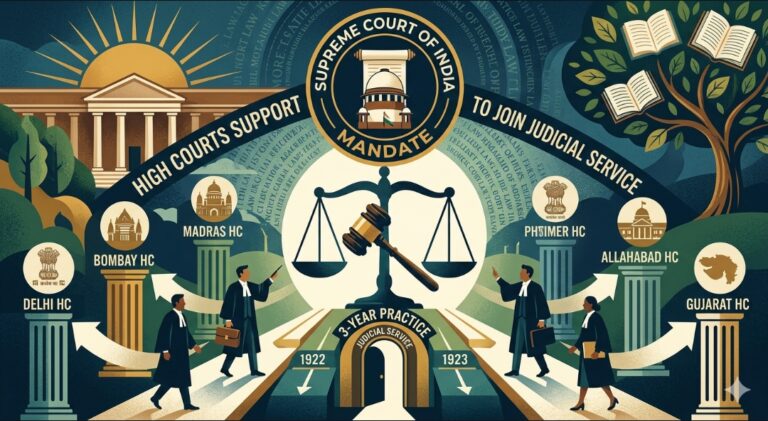
The Bench-Bar Consensus: High Courts Rally Behind Practice Mandate
In response to the Supreme Court’s request for feedback, ten High Courts—including Delhi, Gauhati, Odisha, and Chhattisgarh—have filed submissions supporting the mandatory three-year bar practice requirement.
- Uniformity is Key: The Delhi High Court emphasized the need for a uniform eligibility criterion across the country to prevent disparity or discrimination among candidates.
- Maturity and Temperament: The Gauhati High Court noted that three years of active practice is essential for new law graduates to understand the profession, develop necessary maturity, and become familiar with the critical Bench-Bar relationship.
- Recent Amendments: To align with this stance, the Delhi Judicial Service Rules, 1970 were already amended on February 6, 2026, to reintroduce this requirement.
Understanding the 3-Year Mandate
The mandate stems from the Supreme Court’s view that “bookish knowledge” alone is insufficient for the immense responsibility of a judge.
Core Requirements
| Feature | Details |
|---|---|
| Minimum Experience | 3 years of active legal practice. |
| Calculation Start | Counted from the date of provisional enrollment with a State Bar Council, not the AIBE date. |
| Eligible Experience | Includes time spent as a Law Clerk or judicial intern. |
| Verification | Must be certified by a Senior Advocate (10+ years standing) or a Principal Judicial Officer. |
Why the Rule Was Reinstated
The Supreme Court observed that fresh law graduates often lack exposure to courtroom dynamics and the practical application of law. By requiring practice, the judiciary aims to ensure that entry-level judges possess the professional maturity and practical wisdom needed to handle matters involving life, liberty, and property from day one.
Impact on Aspirants: The Road Ahead
While the rule aims to strengthen judicial quality, it presents new challenges for law students and fresh graduates.
- Delayed Entry: Aspirants now face a mandatory three-year wait after graduation before they can attempt judicial exams.
- Financial Hurdles: Critics have raised concerns that this may deter talented candidates from economically disadvantaged backgrounds who cannot afford low-paying early years in litigation.
- Prospective Application: Importantly, the rule applies prospectively. Recruitment processes already notified or initiated before the May 2025 judgment remain unaffected.
The Supreme Court is currently hearing review petitions in open court to consider these concerns, including potential exemptions for persons with disabilities.