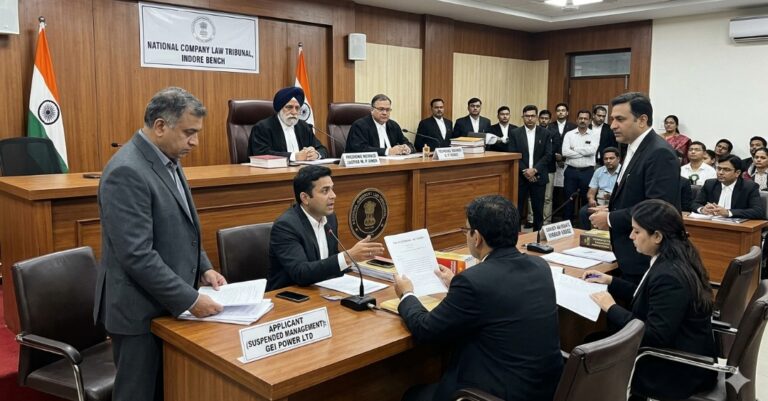
The National Company Law Tribunal (NCLT) Indore Bench recently delivered a significant ruling in the corporate insolvency resolution process (CIRP) of GEI Power Limited, reinforcing the strict eligibility criteria established under the Insolvency and Bankruptcy Code (IBC). The tribunal explicitly rejected an impleadment application filed by the company’s suspended management, who sought to intervene in the final approval proceedings of the resolution plan.
The application was moved by Carnet Elias Fernandes, a promoter and member of the suspended management of GEI Power.
The plea sought to allow the management to participate in the proceedings where the NCLT evaluates the resolution plan already approved by the Committee of Creditors (CoC).
The primary contention from the suspended management was a desire to be heard before the final judicial seal was placed on the company’s future. However, the tribunal’s decision to bar their entry underscores a critical principle of the IBC: once a management is disqualified, they cannot use secondary legal routes to influence the outcome of the insolvency process.
Section 29A: The Unbreakable Barrier
The turning point of the case rested on Section 29A of the IBC. This specific provision was designed as a “gatekeeper” to prevent “unscrupulous” or “defaulting” promoters from regaining control of their companies at a discounted price through the resolution process.
The NCLT noted that the applicant had already been declared ineligible under Section 29A. The bench observed that allowing a disqualified party to join the approval proceedings would effectively bypass the very purpose of that disqualification. The tribunal remarked that such an intervention would not only be legally inconsistent but would also likely lead to “unnecessary delays” in a process where time is of the essence.
Judicial Role vs. Commercial Wisdom
The ruling also clarified the boundaries of the NCLT’s jurisdiction. Under the IBC framework, the “Commercial Wisdom” of the Committee of Creditors is paramount. When a resolution plan reaches the tribunal for approval, the NCLT’s role is limited to a “compliance check” to ensure the plan meets the statutory requirements of Section 30(2) of the Code.
The bench emphasized that the approval stage is not an opportunity to reopen the commercial merits of the plan or to entertain grievances from parties who lacked the legal standing to propose a plan themselves. By rejecting the plea, the NCLT reaffirmed that the Resolution Professional (RP) holds the legal mandate to manage the company’s affairs and represent its interests during this final phase.
Implications for the Insolvency Landscape
This decision by the Indore Bench serves as a stern reminder to promoters and suspended boards across India. It highlights two key takeaways:
- Strict Adherence to Section 29A: Eligibility is a threshold requirement that remains relevant throughout the entire life cycle of the CIRP.
- Efficiency over Intervention: The tribunal prioritized the “maximization of value” and “timely resolution” over the procedural inclusion of parties who have been legally sidelined.
For GEI Power Limited, which entered insolvency following a petition by Union Bank of India, this ruling clears a major hurdle. It paves the way for the tribunal to focus solely on the legality of the submitted resolution plan, bringing the company one step closer to a fresh start under new leadership.
What’s Next?
With the management’s plea dismissed, the focus now shifts to the Resolution Professional and the successful bidder. The tribunal will proceed to evaluate if the approved plan adheres to all legal benchmarks.
With the management’s plea dismissed, the focus now shifts to the Resolution Professional and the successful bidder. The tribunal will proceed to evaluate if the approved plan adheres to all legal benchmarks.