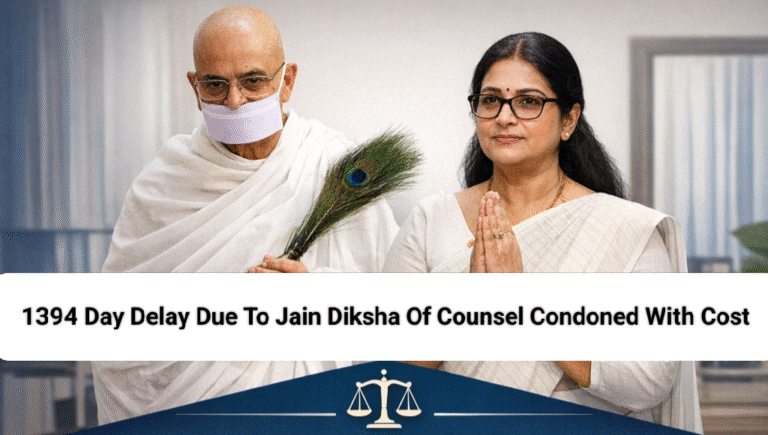
In a noteworthy ruling, the Maharashtra Sales Tax Tribunal demonstrated a balanced approach between procedural discipline and substantial justice by condoning an extraordinary delay of 1394 days in filing an appeal. The case highlights how exceptional personal circumstances, including spiritual commitments, can be considered as “sufficient cause” under law—albeit with conditions.
Background of the Case
The matter arose from an order dated 26 February 2021, against which the appellant, Sudha Metal International, was required to file an appeal within the prescribed statutory period of two months. However, the appeal was eventually filed on 20 March 2025, resulting in a substantial delay of nearly four years (1394 days).
Given this significant delay, the appellant submitted an application for condonation, urging the Tribunal to allow the appeal in the interest of justice. The core issue before the Tribunal was whether such an extraordinary delay could be condoned under the applicable legal framework.
Reason for Delay: Jain Diksha of Counsel
The appellant explained that the delay was neither intentional nor due to negligence. Instead, it was caused by an unusual and compelling circumstance—its counsel had undertaken Jain Diksha, a form of spiritual renunciation in Jainism that involves complete withdrawal from worldly and professional life.
This development, according to the appellant, disrupted the handling of the case entirely. Since the counsel ceased all professional activities, the appellant was left without proper legal guidance, ultimately leading to the delay in filing the appeal.
Legal Issue Before the Tribunal
The central question before the Tribunal was whether such a reason could qualify as “sufficient cause” for condoning an inordinate delay of 1394 days. The Tribunal had to strike a balance between:
- Upholding statutory timelines and procedural discipline
- Ensuring that justice is not denied due to genuine and unavoidable circumstances
Tribunal’s Observations
The Tribunal observed that the power to condone delay is discretionary and must be exercised judiciously. It reiterated the well-established legal principle that the term “sufficient cause” should be interpreted liberally to advance substantial justice, particularly where the delay is not deliberate or mala fide.
However, the Tribunal also emphasized that such liberal interpretation does not mean that every delay, especially one of such magnitude, should be condoned automatically. A delay of 1394 days is undeniably significant and requires a convincing and bona fide explanation.
In the present case, the Tribunal found the reason provided by the appellant to be both unusual and credible. The act of Jain Diksha is a serious spiritual commitment, involving complete detachment from worldly affairs, which includes professional obligations. The Tribunal accepted that such a circumstance could reasonably disrupt legal proceedings.
Importantly, there was no indication of intentional delay, negligence, or abuse of process on the part of the appellant.
Decision of the Tribunal
After carefully evaluating the facts and circumstances, the Tribunal decided to condone the delay. However, this relief was not granted unconditionally.
Recognizing the need to maintain procedural discipline and deter casual delays, the Tribunal imposed costs on the appellant as a condition for condonation. This approach ensured that while justice was served, the sanctity of statutory timelines was also respected.
Key Takeaways
This ruling offers several important insights for taxpayers, legal practitioners, and businesses:
1. Exceptional Circumstances Can Be Considered
The case reinforces that courts and tribunals are willing to consider genuine and extraordinary personal circumstances, including spiritual commitments, as valid grounds for delay.
2. Liberal Interpretation of “Sufficient Cause”
The decision aligns with the principle that procedural laws are meant to facilitate justice, not obstruct it. Where the explanation is bona fide, a liberal approach may be adopted.
3. No Blanket Condonation
Despite adopting a liberal view, the Tribunal made it clear that excessive delays will not be condoned mechanically. Each case must be evaluated on its own merits.
4. Costs as a Balancing Tool
Imposition of costs serves as a deterrent against misuse of leniency while allowing genuine cases to proceed. It reflects a balanced judicial approach.
5. Importance of Diligence
The case also highlights the importance for litigants to remain vigilant and proactive in managing their legal matters, even in the face of unforeseen challenges.
Conclusion
The ruling in this case stands as an example of judicial pragmatism. By condoning a 1394-day delay caused by the counsel’s Jain Diksha, the Tribunal acknowledged the realities of human and spiritual circumstances. At the same time, by imposing costs, it reinforced the importance of procedural discipline.
Ultimately, the decision underscores a key principle of law—justice should not be defeated by technicalities, but neither should procedural safeguards be taken lightly.