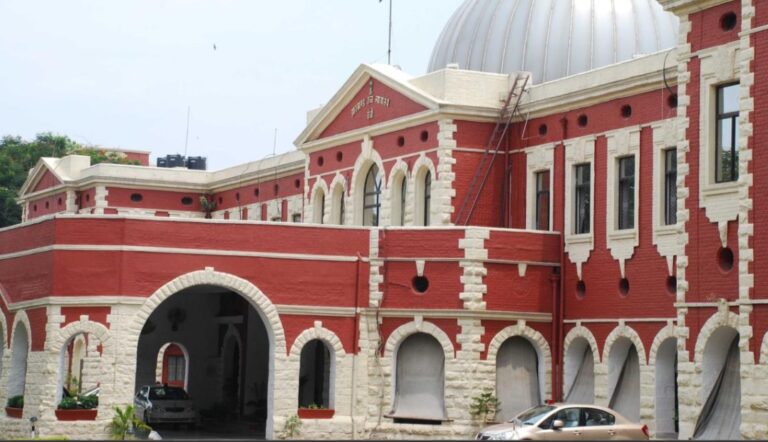
The Jharkhand High Court has reiterated the settled principle that a writ petition under Article 226 of the Constitution cannot be entertained against a GST order-in-original when an effective statutory appellate remedy is available and no violation of the principles of natural justice is alleged. The Court held that a mere challenge on jurisdictional grounds is insufficient to bypass the appellate mechanism prescribed under the GST law, and directed the petitioner to exhaust the statutory remedy by filing an appeal in accordance with law.
Facts of the Case
The petitioner assailed an order-in-original passed under the GST law by filing a writ petition before the Jharkhand High Court. The principal ground taken by the petitioner was lack of jurisdiction of the adjudicating authority.
However, no plea was raised regarding violation of principles of natural justice, such as denial of opportunity of hearing, non-supply of documents, or absence of reasoned order.
Issue Before the Court
Whether a writ petition under Article 226 of the Constitution is maintainable against an order-in-original under GST when an effective statutory appellate remedy exists and no violation of natural justice is alleged.
Held by the High Court
The Jharkhand High Court held that:
- When the GST statute provides a specific appellate mechanism, the writ jurisdiction should not be invoked as a matter of routine.
- In the present case, no violation of natural justice was pleaded or demonstrated.
- Merely raising a jurisdictional objection is not sufficient to bypass the statutory appeal remedy.
Accordingly, the writ petition was not maintainable.
Court’s Observations
- The High Court reiterated the settled principle that writ jurisdiction is discretionary and should be exercised sparingly.
- Unless there is:
- violation of natural justice,
- breach of fundamental rights, or
- patent lack of jurisdiction apparent on record,
the petitioner must exhaust alternative statutory remedies.
- The GST law provides a complete code of adjudication and appeal, which must be followed.
Final Directions
- The writ petition was disposed of.
- The petitioner was directed to file a statutory appeal within six weeks.
- The appeal must be filed after complying with all mandatory pre-conditions, including payment of prescribed pre-deposit.
Ratio Decidendi
A writ petition against a GST order-in-original is not maintainable when:
- no violation of natural justice is alleged, and
- an efficacious statutory appellate remedy is available.
Key Takeaway
Taxpayers cannot directly approach the High Court under Article 226 against GST orders unless exceptional circumstances exist. Jurisdictional challenges alone are insufficient—statutory appeal remedies must first be exhausted.