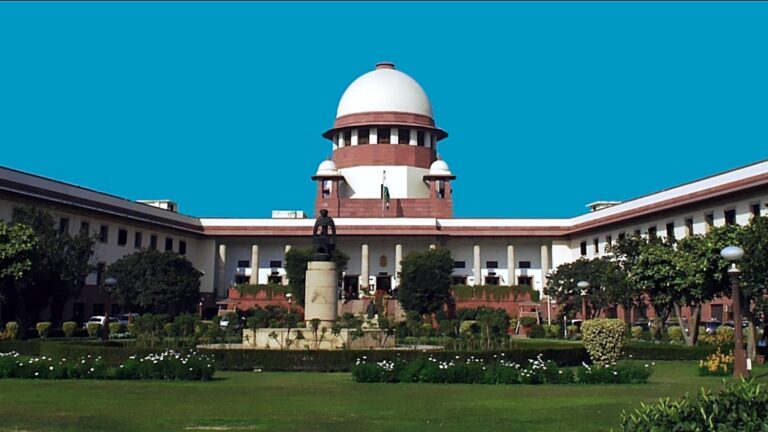
A Public Interest Litigation (PIL) has been filed in the Supreme Court of India under Article 32 of the Constitution, challenging the constitutional validity of certain powers granted to Income Tax authorities under the newly enacted Income Tax Act, 2025. The main grievance is that the law permits tax officials to search and access a taxpayer’s digital data and devices during investigations.
Key Legal Issue
The petition argues that provisions in the Act allow authorities to search and access “computer systems” and “virtual digital space” — language that, according to the petitioner, may override privacy protections in the Indian Constitution. This includes the power to access:
- personal digital devices (like mobile phones, laptops),
- cloud servers and remote storage,
- electronic communications (emails, messages),
- social media, online accounts, and other digital data.
The petitioner claims this regime violates the fundamental right to privacy under Article 21 of the Constitution, as interpreted by the Supreme Court in earlier cases such as Justice K.S. Puttaswamy v. Union of India.
What the Law Says (Background)
🧠 Expanded Search Powers in the 2025 Act
Under the new Act — particularly Clause 247 — “virtual digital space” is very broadly defined, and authorised officers are empowered to enter and search these spaces during investigations. This includes:
- Access to digital platforms (emails, social media, cloud storage, online accounts)
- Override encryption or access codes, potentially even without the taxpayer’s consent
- Examine electronic communications and stored data during a search session.
This goes significantly beyond the old Section 132 under the 1961 Act, which primarily dealt with physical premises and paper documents — although officers already had some implicit power to seize electronic evidence.
🧾 Government’s Position
According to official clarifications (such as by the Press Information Bureau), the expanded powers are not meant for routine surveillance of taxpayers’ private data; rather, they apply only during formal search and seizure operations where there is a tangible suspicion of tax evasion, and honest taxpayers won’t be routinely monitored.
Supreme Court’s Early Observations so Far
In the initial hearing of the PIL (reported on 10 Feb 2026), the Supreme Court observed — albeit briefly — that the law does not confer uncontrolled powers on Income Tax authorities. However, very limited detail was shared about substantive arguments or timelines.
Importantly, this was a preliminary hearing, not a final adjudication — and the Court did not strike down or uphold the challenged provisions at that stage.
Constitutional Debate at the Heart of the Dispute
🛡️ Right to Privacy vs. Enforcement Powers
• Right to Privacy (Fundamental Right):
Under Indian constitutional jurisprudence, privacy is protected under Article 21 unless the state action satisfies legality, necessity, and proportionality.
• Tax Enforcement Powers:
The government maintains that modern tax evasion increasingly involves digital records, so the law needs explicit authority to access such data during investigations.
The petitioner argues that the scope of digital searches is too broad and lacks adequate safeguards, potentially breaching privacy without sufficient judicial oversight, safeguards around data retention and deletion, or limits on scope.
What This Means Practically
If the Supreme Court eventually strikes down or reads down these provisions, it could require:
- stronger judicial warrant requirements,
- clear limits on data access and retention,
- procedural safeguards to protect personal data unrelated to tax evasion.
If it is upheld, then the government retains these expanded digital search powers (similar to how physical searches operate today).
Why This Matters
This PIL is not just about tax law — it’s about how Indian law balances:
- modern digital enforcement needs,
- constitutional privacy protections, and
-
state power to investigate financial wrongdoing.