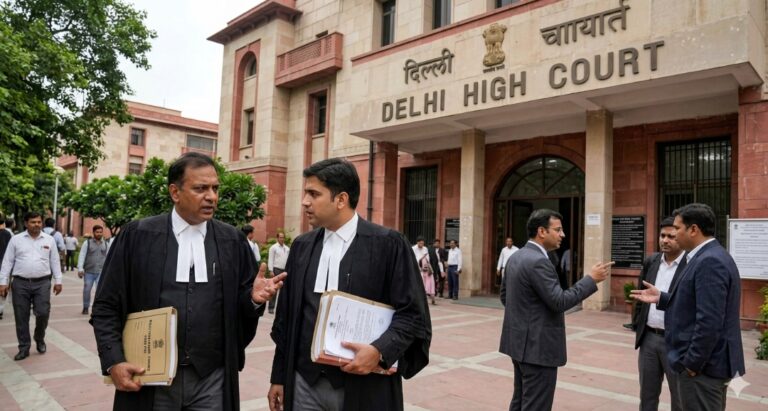
In a significant ruling dated March 25, 2026, in case of M/s S. Chand and Company Pvt. Ltd. v. Employee xxx, the Delhi High Court provided much-needed clarity on the distinction between contractual breaches and defamation claims in employer-employee disputes. The judgment, delivered by Justice Neena Bansal Krishna, underscores that while disclosure of confidential business information by an employee may violate contractual obligations, it does not automatically amount to defamation unless specific legal requirements are met.
Understanding the Core Issue
The case revolved around allegations made by a publishing company against a former employee, accusing them of sharing confidential business information. The company attempted to frame the act not only as a breach of contract but also as defamation. However, the Court drew a clear line between these two legal concepts.
Justice Krishna emphasized that disputes arising from employment relationships—particularly those involving confidentiality clauses—are primarily governed by contract law. A breach of such obligations may entitle the employer to remedies under contract law, such as damages or injunctions. However, elevating such conduct to a claim of defamation requires the presence of additional, specific elements.
Contractual Breach vs. Defamation
One of the key takeaways from the judgment is the distinction between a contractual wrong and a reputational wrong. Defamation, by its very nature, involves the publication of a false statement that harms the reputation of a person or entity in the eyes of others. The Court held that merely disclosing confidential information does not inherently carry a “defamatory imputation.”
In other words, not every wrongful act that causes harm to a business can be classified as defamation. The alleged act must include a statement that lowers the reputation of the aggrieved party in the estimation of third parties. Without such an element, the claim cannot succeed as defamation.
Importance of Specific Pleadings
Another critical aspect highlighted in the ruling was the lack of specificity in the plaintiff’s pleadings. The Court found the company’s allegations to be vague and insufficiently detailed. It failed to clearly establish:
- What exact confidential information was disclosed
- The identity of the individuals or entities to whom the information was communicated
- The precise context or substance of the alleged communication
This lack of clarity proved fatal to the company’s case. The Court reiterated that defamation claims must be backed by precise and concrete allegations. General or ambiguous assertions are not sufficient to establish a cause of action.
The Publication Requirement
A cornerstone of defamation law is the requirement of “publication,” meaning that the alleged defamatory statement must be communicated to a third party. The Court observed that mere interaction or contact with other employees or external parties does not satisfy this requirement.
There must be clear evidence that a specific statement was made and that such a statement had the effect of damaging the reputation of the plaintiff. In the absence of such proof, a defamation claim cannot be sustained.
Broader Legal Implications
This ruling carries important implications for employers and businesses. It serves as a caution against using defamation as a blanket remedy for all forms of employee misconduct. While companies are well within their rights to protect confidential information, they must choose the appropriate legal framework to address violations.
By reinforcing the distinction between contractual disputes and defamation, the Court has ensured that legal remedies are applied in a more precise and principled manner. Employers must now be more diligent in drafting pleadings and in identifying the correct cause of action when pursuing legal claims against employees.
Conclusion
The Delhi High Court’s decision is a timely reminder that not every wrongful act translates into defamation. The ruling strengthens the legal framework by clearly separating reputational harm from contractual breaches. For businesses, it highlights the importance of specificity, proper legal classification, and evidentiary support when initiating legal proceedings.
Ultimately, this judgment promotes a more disciplined and accurate approach to litigation, ensuring that defamation law is not misused in ordinary employment disputes.