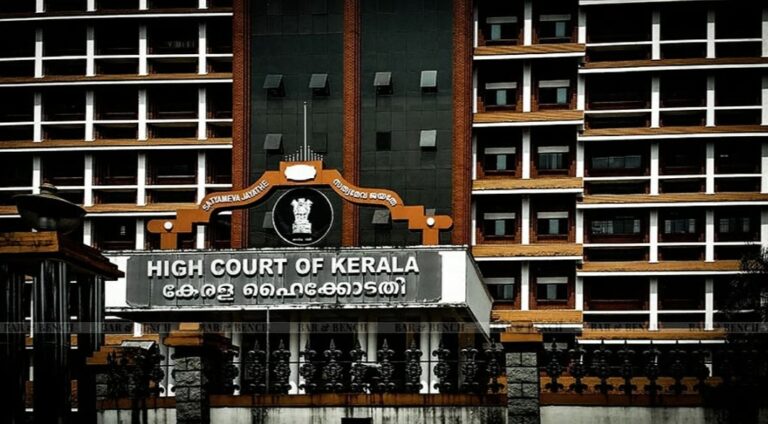
In a significant ruling on cheque bounce liability, the Kerala High Court has reaffirmed that a Managing Director who signs dishonoured cheques and manages the day-to-day affairs of a company can be held vicariously liable under Section 141 of the Negotiable Instruments Act, 1881.
Justice M.B. Snehalatha dismissed a revision petition filed by the second accused in a cheque dishonour case, upholding his conviction along with the accused company under Section 138 of the NI Act.
Background of the Case
The petitioner served as the Managing Director of the accused company and was responsible for its daily business operations. The dispute arose when the company purchased cement from the complainant, India Cements Limited, and issued three cheques worth ₹2 lakh each as partial payment of outstanding dues.
However, all three cheques were returned unpaid due to insufficient funds. Following this, the complainant issued a statutory legal notice demanding payment of the cheque amounts.
Reply Notice and Admission of Transaction
In response, the accused sent a reply notice acknowledging the transaction and requesting additional time to make payment. Despite this assurance, the payment was not made, prompting the complainant to initiate criminal proceedings under Section 138.
During trial, the accused denied liability and disputed that the cheques were issued in discharge of a legally enforceable debt.
Trial Court Conviction and Sentence
The trial court convicted the petitioner and sentenced him to:
- One year imprisonment
- Compensation of ₹6 lakh payable to the complainant
On appeal, the Sessions Court upheld the conviction but reduced the imprisonment to “till the rising of the court,” while maintaining the compensation amount.
The petitioner then approached the Kerala High Court challenging the conviction.
Kerala High Court’s Observations on Section 141
The High Court examined the scope of Section 141, which deals with offences committed by companies and the liability of persons in charge of the company’s business.
The Court referred to the Supreme Court’s decision in Hitesh Verma v. Health Care at Home India Pvt. Ltd., which laid down two essential requirements for fastening vicarious liability:
- The complaint must specifically state that the accused was in charge of the company’s business.
- The accused must have been responsible for the conduct of business at the time of the offence.
The Court emphasized:
Criminal liability cannot automatically be imposed on directors. Only those who were in charge of and responsible for the company’s affairs at the relevant time can be prosecuted.
Managing Director’s Role Proved in the Present Case
Applying these principles, the Court found that:
- The petitioner admitted he was the Managing Director
- He was actively involved in business transactions
- He signed the dishonoured cheques
- The reply notice showed acknowledgment of liability
Thus, the legal requirements under Section 141 were satisfied.
Final Verdict
The Kerala High Court dismissed the revision petition and upheld the conviction and compensation order, holding that the Managing Director was rightly made vicariously liable for the cheque bounce offence.
Case Details
- Case No: Crl.Rev.Pet. No. 92 of 2019
- Case Title: V.J. Joseph v. The India Cements Limited and Ors.
-
Citation: 2026 LiveLaw (Ker) 79