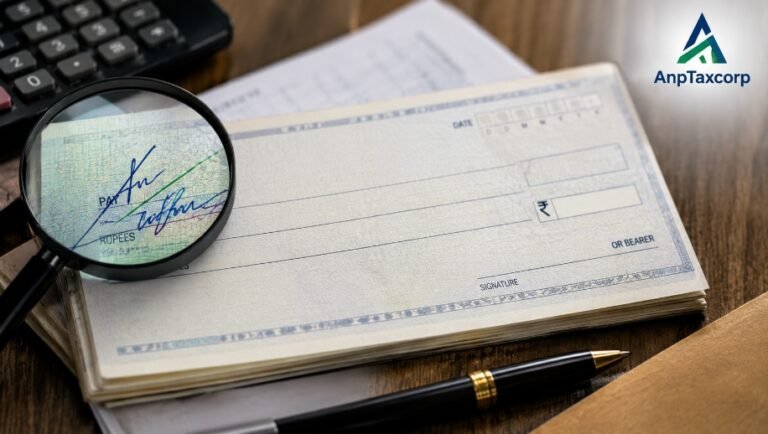
The Kerala High Court has clarified that a cheque does not become invalid merely because its signature, date, amount or other particulars have been written using different inks. The Court observed that there is no legal requirement under the Negotiable Instruments Act, 1881, that all entries appearing on a cheque must necessarily be made with the same pen or ink.
The ruling assumes significance in cheque dishonour cases, where accused persons frequently challenge the validity or execution of a cheque on the ground that different inks or handwriting appear on various portions of the instrument.
The judgment was delivered by Justice A. Badharudeen in D. Chandran v. S. Anilkumar and Anr., Crl. A. No. 932 of 2021.
Different Ink Does Not Make a Cheque Invalid
The Kerala High Court rejected the contention that the use of different inks on a cheque, by itself, creates sufficient doubt regarding its execution.
The Court held that merely because the signature was made using one ink while the other particulars were filled in using another, the cheque cannot automatically be considered an invalid negotiable instrument. The difference in ink also cannot, by itself, be treated as sufficient evidence to doubt the probable execution of the cheque.
The Court essentially emphasised that the validity of a cheque must be examined on the basis of the entire evidence and surrounding circumstances rather than on the appearance of different inks on the instrument.
Dispute Involved a ₹7 Lakh Cheque
The case arose from the dishonour of a cheque for ₹7 lakh issued by S. Anilkumar in favour of D. Chandran.
The cheque was returned unpaid with the bank endorsement “payment stopped by drawer.” Following the dishonour, the complainant initiated proceedings under Section 138 of the Negotiable Instruments Act, 1881, alleging commission of an offence relating to dishonour of cheque.
However, the Magistrate acquitted the accused. The Magistrate was of the view that the complainant had not sufficiently established that he was the holder of the cheque entitled to receive the amount and, therefore, could not claim the statutory presumptions available under Sections 118 and 139 of the NI Act.
The complainant challenged the acquittal before the Kerala High Court.
Accused Admitted Borrowing Money and Issuing Cheque
Before the High Court, the accused took the defence that he had borrowed ₹2.35 lakh from the complainant in 2011. According to him, he had issued two signed blank cheques as security for the transaction.
He further claimed that the entire liability had subsequently been discharged and, therefore, the cheque could not be presented for recovery of any legally enforceable debt.
The High Court, however, found that the accused had admitted both the borrowing of money and the issuance of the cheque bearing his signature.
While there was evidence relating to repayment of ₹35,000, the Court noted that there was no convincing evidence establishing repayment of the remaining ₹2 lakh.
Burden of Proving Repayment Lies on the Person Claiming Discharge
The Court reiterated an important principle concerning the defence of repayment.
Where an accused asserts that an existing monetary liability has already been discharged, such assertion must be supported by cogent and convincing evidence. A mere statement that the debt was repaid is not sufficient to defeat the statutory presumptions under the NI Act.
The Court also rejected the argument that the complainant’s claim was improbable because he had stated that the money was kept at his residence before being lent to the accused.
According to the Court, keeping money at home cannot, by itself, be regarded as an inherently improbable circumstance. Such an allegation must be supported by evidence demonstrating actual improbability.
Sections 118 and 139 NI Act: Probable Defence Must Be Supported by Evidence
The judgment also reinforces the significance of the presumptions under Sections 118 and 139 of the Negotiable Instruments Act.
Once the foundational facts required for invoking the statutory presumptions are established, the burden shifts to the accused to rebut them. Merely raising a probable defence is not, by itself, sufficient. The defence must be supported by material and evidence capable of rebutting the statutory presumption.
The High Court concluded that the complainant had successfully discharged his initial burden and was entitled to the presumptions available under Sections 118 and 139 of the NI Act.
Consequently, the Magistrate had erred in concluding that the complainant had failed to establish his case.
Kerala High Court Convicts Accused Under Section 138
Allowing the appeal, the Kerala High Court set aside the order of acquittal and convicted the accused under Section 138 of the Negotiable Instruments Act.
The accused was sentenced to simple imprisonment for one day, till the rising of the Court, and was directed to pay a fine of ₹8.15 lakh. In default of payment of the fine, he was directed to undergo six months’ simple imprisonment.
Key Takeaways
The judgment provides several important takeaways for cheque dishonour litigation:
- Different inks on a cheque do not automatically invalidate the instrument.
- Signature and other cheque particulars need not necessarily be written in the same ink.
- Mere difference in ink is not sufficient to establish doubt regarding execution.
- An admission of borrowing and issuance of a signed cheque can have significant evidentiary consequences.
- A person claiming repayment of a debt must establish such repayment through cogent evidence.
- Mere raising of a probable defence may not be sufficient to rebut the presumptions under Sections 118 and 139 of the NI Act.
- The overall evidence and circumstances must be considered while determining the validity and enforceability of a cheque.
Case Details
Case Title: D. Chandran v. S. Anilkumar and Anr.
Case Number: Crl. A. No. 932 of 2021
Court: Kerala High Court
Judge: Justice A. Badharudeen
Provision Involved: Section 138, Negotiable Instruments Act, 1881
Relevant Provisions: Sections 118 and 139, Negotiable Instruments Act, 1881
The decision serves as an important reminder that technical objections relating to the appearance of a cheque cannot, by themselves, defeat a prosecution under Section 138 of the NI Act when the surrounding evidence establishes the existence of a legally enforceable liability and issuance of the cheque.