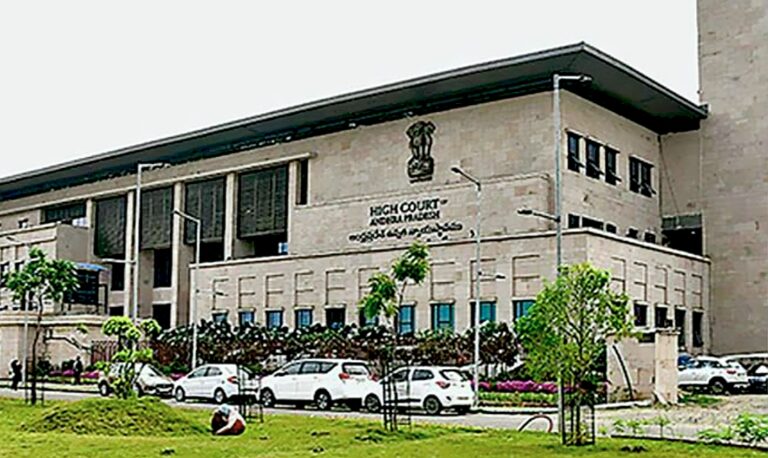
Refund of accumulated Input Tax Credit (ITC) arising from an inverted duty structure has been one of the most litigated issues under the GST regime, largely due to anomalies in the computation formula prescribed under Rule 89(5) of the CGST Rules. Several taxpayers faced rejection of refund claims under the unamended rule, even though the accumulation of credit was genuine and statutorily recognized under Section 54(3) of the CGST Act. In a significant ruling, the Andhra Pradesh High Court in M/s. Awl Agri Business Limited v. The Joint Commissioner (GST Appeals) & Ors. held that the amendment to Rule 89(5) is clarificatory and curative in nature, and therefore operates retrospectively. The Court directed that refund claims earlier rejected under the old formula must be reconsidered by applying the amended provisions, providing major relief to taxpayers affected by inverted duty structures.
Background
The petitioner, M/s. Awl Agri Business Limited, engages in the import and distribution of edible oil. Due to an inverted duty structure—where the GST on inputs exceeded the GST on the final goods supplied—significant Input Tax Credit (ITC) accumulated in its electronic credit ledger.
Under Section 54(3) of the Central Goods and Services Tax Act, 2017, taxpayers are entitled to a refund of such accumulated ITC where output tax liability is lower than the tax paid on inputs. Rule 89(5) of the CGST Rules provides a formula to compute the maximum ITC refund in such cases.
Pre-Amendment Regime and Rejections
Before July 5, 2022, the refund computation formula under Rule 89(5) did not appropriately factor in the ITC on input services and used a restrictive formula. Many refund claims—including those filed by the petitioner for earlier tax periods—were rejected by the adjudicating authority and upheld by the appellate authority on this basis.
The Amendment and Legal Dispute
The formula in Rule 89(5) was amended by Notification No. 14/2022-Central Tax on July 5, 2022 to address anomalies and include a more comprehensive computation methodology, effectively allowing refund claims to include credits on inputs and input services proportional to the output.
The Revenue’s position, supported by Circular No. 181/13/2022-GST, was that the amendment was prospective and could not apply to refund claims that were rejected before the amendment’s effective date.
Contentions
- Revenue’s Argument: The amended Rule 89(5) formula should apply only prospectively from the date of notification (July 5, 2022). The circular asserting this was relied upon to deny reconsideration of older claims.
- Petitioner’s Argument: The amendment corrected ambiguity and an anomalous formula. As such, it was curative and clarificatory, meaning it should apply retrospectively to all pending refund claims—including those rejected earlier—so long as they were within the statutory limitation period under Section 54.
High Court’s Findings
The Andhra Pradesh High Court agreed with the petitioner on key legal points:
- Nature of the Amendment: The amendment to Rule 89(5) was clarificatory and curative—aimed at fixing a defective formula rather than introducing a new liability or benefit. A clarificatory amendment is presumed to operate retrospectively unless explicitly made prospective.
- Precedent Support: The High Court followed reasoning in other High Court jurisprudence (including Tirth Agro Technology Pvt. Ltd., where a similar issue was considered) confirming that the amendment should apply retrospectively.
- Right to Refund: Where a taxpayer’s refund claim was pending or pursued consistently, denial on the basis of the unamended formula could not be sustained once the clarificatory amendment is read into the law retrospectively. Accordingly, previous rejections could not stand.
Order
The High Court:
- Set aside the earlier rejection and appellate orders dismissing the refund claims.
- Directed the tax authorities to re-examine the refund applications afresh using the amended Rule 89(5) formula retrospectively.
Practical Implications
This ruling is significant for taxpayers with accumulated ITC due to inverted tax structures:
- Refund claims rejected earlier because of the old formula may now be revived and recalculated using the amended, taxpayer-friendly computation method.
-
It reinforces the principle that clarificatory amendments to GST rules should apply retrospectively, ensuring taxpayers are not denied statutory benefits due to earlier drafting anomalies.