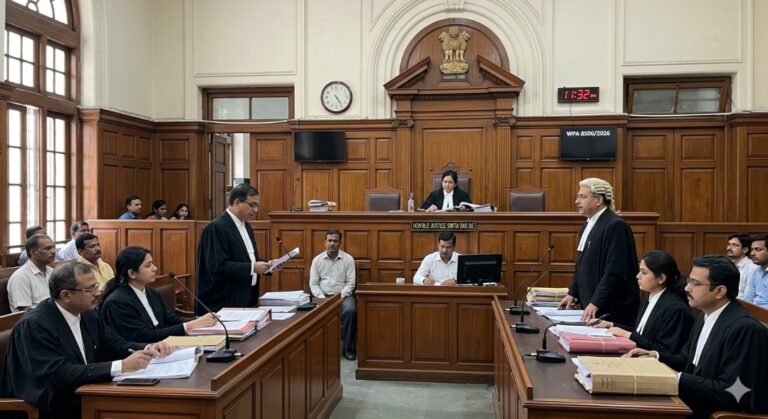
In a significant ruling addressing procedural challenges under the GST regime, the Calcutta High Court in Ram Chandra Sahoo v. Union of India and Others granted relief to a taxpayer who was unable to file an appeal electronically due to a technical glitch on the GST portal. The case highlights the growing friction between digital compliance systems and taxpayers’ substantive rights, particularly when technological failures obstruct access to statutory remedies.
The dispute arose from an ex parte adjudication order passed under Section 74 of the CGST Act involving reversal of Input Tax Credit (ITC), along with interest and penalty. The petitioner, engaged in the wholesale and retail trade of medicines, challenged the order not only on merits but also on procedural grounds, including non-consideration of his reply to the show cause notice.
Recognizing the genuine hardship caused by system limitations, the Court permitted manual filing of the appeal and condoned the delay, thereby reinforcing the principle that procedural technicalities should not defeat the right to appeal. This decision serves as an important precedent for taxpayers facing similar difficulties in navigating the GST portal.
Case Title
Ram Chandra Sahoo v. Union of India and Others
Court & Bench
Calcutta High Court
Single Bench: Justice Smita Das De
Date of Order
14 May 2026
Order Number
WPA 8506 of 2026
Background of the Case
The present writ petition arose from a dispute concerning the reversal of Input Tax Credit (ITC) under the provisions of the Goods and Services Tax (GST) law. The petitioner, Mr. Ram Chandra Sahoo, is engaged in the business of wholesale and retail trading of medicines. His business includes both taxable supplies as well as exempt (non-taxable) supplies, thereby attracting the provisions relating to proportionate ITC reversal.
The dispute relates to the assessment period spanning from 2017–18 to 2021–22. During this period, the tax authorities initiated proceedings under Section 74 of the CGST Act, alleging wrongful availment of ITC attributable to exempt supplies.
A show cause notice dated 30 July 2024 was issued to the petitioner, followed by an ex parte adjudication order dated 6 January 2025, whereby the department confirmed the demand.
Key Issues Involved
The case primarily revolved around the following issues:
- Whether the adjudication order was valid despite the petitioner’s claim that a reply to the show cause notice had been filed but not considered.
- Whether the petitioner should be allowed to file an appeal manually when the GST portal failed to accept the appeal due to technical glitches.
- Whether delay in filing the appeal could be condoned in light of compliance with pre-deposit requirements.
Demand Raised by the Department
The adjudication order confirmed the following liabilities:
- ITC Reversal Demand: ₹3,02,100
(CGST: ₹1,51,050 + SGST: ₹1,51,050) - Interest: As applicable under the Act
- Penalty: 100% of the tax amount
Thus, the total financial exposure, including penalty, amounted to ₹6,04,200, excluding interest.
Petitioner’s Contentions
The petitioner challenged both the show cause notice and the adjudication order on multiple grounds:
- Violation of Principles of Natural Justice
It was contended that a reply to the show cause notice had indeed been filed; however, the same was not taken into consideration before passing the ex parte order. - Technical Glitch in GST Portal
The petitioner submitted that while attempting to file an appeal against the adjudication order in Form GST APL-01, the GST portal failed to accept the upload due to technical issues beyond his control. - Compliance with Pre-deposit Requirement
It was emphasized that the petitioner had already complied with the statutory requirement of pre-deposit, demonstrating bona fide intent to pursue the appeal.
Submissions by the Respondents
The Revenue authorities, represented by senior counsel, defended the adjudication process and the validity of the order. However, the issue of technical glitch in the GST portal and the petitioner’s inability to file the appeal electronically was a central point for consideration before the Court.
Observations of the Court
The Calcutta High Court took a pragmatic view of the matter, particularly in light of the increasing reliance on digital infrastructure under the GST regime.
The Court acknowledged that:
- Technical difficulties on the GST portal can impede statutory remedies available to taxpayers.
- The right to appeal is a substantive right and should not be defeated due to procedural or technical constraints.
- The petitioner had already made the required pre-deposit, indicating genuine intent to challenge the order.
The Court also implicitly recognized that denial of the opportunity to file an appeal due to system errors would amount to a denial of justice.
Decision and Directions
In light of the above considerations, the Court issued the following directions:
- Permission for Manual Filing of Appeal
The petitioner was allowed to file the appeal manually in Form GST APL-01 within a period of two weeks from the date of the order. - Condonation of Delay
The delay in filing the appeal was condoned, particularly considering that the petitioner had already complied with the pre-deposit requirement. - Direction to Appellate Authority
The appellate authority was directed to:- Accept the manually filed appeal, and
- Dispose of the same expeditiously, preferably within eight weeks.
Significance of the Ruling
This judgment reinforces an important principle in GST litigation: procedural technicalities, especially those arising from system errors, should not override substantive rights of taxpayers.
The ruling is significant for the following reasons:
- It provides relief to taxpayers facing genuine technical issues on the GST portal.
- It affirms that manual filing of appeals is permissible in exceptional circumstances.
- It highlights the judiciary’s willingness to ensure access to justice despite digital infrastructure limitations.
Conclusion
The decision in Ram Chandra Sahoo v. Union of India and Others is a welcome step towards ensuring fairness in GST adjudication and appellate processes. By allowing manual filing and condoning delay caused by technical glitches, the Calcutta High Court has upheld the fundamental principle that justice must not be denied due to procedural barriers.
This ruling will serve as an important precedent for taxpayers encountering similar issues with the GST portal, particularly in the context of filing appeals within statutory timelines.
Follow the Link below to Watch the video: