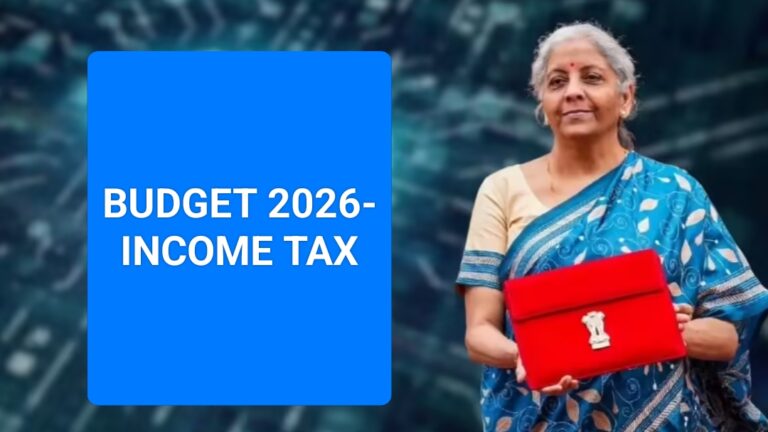
The Union Budget 2026, presented by Finance Minister Nirmala Sitharaman, brings significant structural and compliance-oriented changes to the income tax framework while keeping tax rates unchanged. Despite widespread expectations of relief through revised income tax slabs, the government chose to maintain the existing rates under both the old and new tax regimes. The Budget’s key focus remains on simplification and ease of compliance, highlighted by the announcement that a new Income Tax Act will come into force from April 1, 2026, and by extending the deadline for filing revised income tax returns up to March 31 on payment of a nominal fee.
1. Income Tax Slabs and Rates — No Changes
- The Budget did not change the income-tax slab rates for the financial year 2026-27 (assessment year 2027-28). Both old and new tax regimes remain as they currently stand.
- That means no reduction in tax rates or new rebates this year — contrary to many taxpayers’ expectations.
Current new regime slab (illustrative example):
- Up to ₹4 lakh: Nil
- ₹4–8 lakh: 5%
- ₹8–12 lakh: 10%
- ₹12–16 lakh: 15%
- ₹16–20 lakh: 20%
- ₹20–24 lakh: 25%
- Above ₹24 lakh: 30%
(Old regime continues to offer deductions like 80C, HRA, etc., and taxpayers can choose annually between old and new regimes.)
2. New Income Tax Act Effective 1 April 2026
- A major structural reform this year was the announcement that the new Income Tax Act, 2025, will be implemented from 1 April 2026, replacing the Income-Tax Act, 1961.
- The goal is to modernise and simplify the law by reducing complexity in compliance, cutting obsolete provisions, and making tax rules more user-friendly. Detailed rules and new ITR forms will be notified soon.
3. ITR Filing Deadlines — Staggered & Extended
🗓 Original Filing Deadlines
- ITR-1 and ITR-2 (simpler individual returns): 31 July
- Non-audit business returns & trusts: 31 August
(unchanged)
🛠 Revised Return Window
- The **deadline to file revised income-tax returns (to correct errors or omitted income) has been extended from 31 December to 31 March of the relevant assessment year — but with a nominal fee if filed after 31 December.
- This gives taxpayers more time to fix mistakes without strict penalties.
💡 Fee for Late Revision
- Nominal fee (approx. Rs 5,000) applies if returns are revised after December 31.
- For taxpayers with taxable income ≤ ₹5 lakh, a reduced fee (e.g., ₹1,000) is proposed.
➡️ This is a significant compliance relief — providing a more rational window to correct returns, especially useful when documents (like corrected Form-16s) arrive late.
4. Other Income-Tax Compliance & Relief Measures
While the slabs stayed unchanged, the Budget included several supportive measures aimed at easing tax compliance and reducing friction for taxpayers:
📍 Simplified Compliance
- Simplification of TDS/TCS processes and procedures for filing lower or nil deduction certificates.
- Procedures like submission of Forms 15G/15H made easier for relevant taxpayers.
📍 Tax Reliefs for Specific Cases
- Interest on motor-accident claim awards made fully tax-free in some cases, with TDS removed — a relief primarily for accident claimants.
- Non-Resident Indians (NRIs) and others receive certain relief measures to streamline compliance.
📍 TCS Changes
- Reduction in TCS rates on liberalised remittances (e.g., education and medical expenses abroad) helps reduce blocked funds and upfront costs when remitting abroad.
📍 Capital Markets (incidental but relevant)
- Some changes in Securities Transaction Tax (STT) rates were proposed, affecting trading costs — important for taxpayers active in equities.
Bottom Line for Taxpayers
| Focus Area | Budget 2026 Key Change |
|---|---|
| Tax Rates/Slabs | No change; slabs stay as before |
| Filing Deadlines | Staggered deadlines retained |
| Revised Return Deadline | Extended to 31 March (nominal fee) |
| New Tax Law | Income Tax Act, 2025 effective 1 Apr 2026 |
| Compliance | Simplified TDS/TCS, forms, certificates |
What You Didn’t Get in This Budget
- No headline tax cuts or increase in rebate thresholds this year.
- Standard deduction and basic exemption limits were not increased in this budget cycle.
Why These Changes Matter
✔ More realistic compliance windows help ordinary taxpayers avoid penalties when honest mistakes occur.
✔ Implementing a modernised Income Tax Act aims to reduce litigation and confusion in future years — a structural reform with long-term potential.
✔ Focus on simplifying TDS/TCS and filing procedures directly benefits salaried employees, small taxpayers, NRIs, and others who often struggle with compliance.