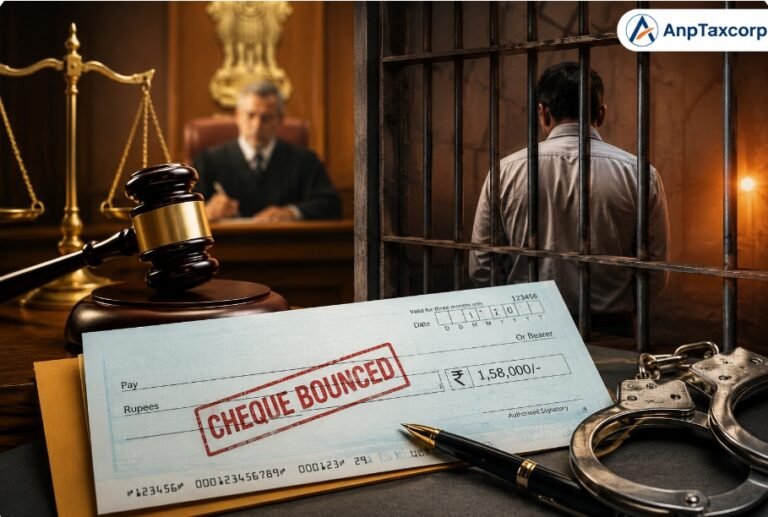
A court in Faridabad has sentenced a man to six months of simple imprisonment in a cheque dishonour case under Section 138 of the Negotiable Instruments Act, 1881. The court also directed the convict to pay ₹1.58 lakh as compensation to the complainant, highlighting the legal consequences that can follow when a cheque is dishonoured and the resulting liability is not resolved.
Cheque Issued in December 2022
According to the information provided by the police, Vijay Kumar had issued a cheque in favour of Sonu on December 7, 2022. When the cheque was presented for encashment through the bank, it was dishonoured.
Following the cheque bounce, the dispute was taken before the court. The matter reached the judicial process on January 9, 2023, eventually resulting in the conviction and sentencing of Vijay Kumar.
The case was dealt with under Section 138 of the Negotiable Instruments Act, which deals with the dishonour of cheques for insufficiency of funds or when the amount exceeds the arrangement made with the bank, subject to fulfilment of the statutory requirements.
Accused Sought Leniency
At the stage of sentencing, Vijay Kumar requested the court to take a lenient view and reduce the severity of the punishment.
The complainant, however, opposed the request for leniency. His counsel argued that there were no circumstances justifying a reduced sentence and urged the court to impose the maximum punishment permissible under the law.
After considering the circumstances of the matter, the court declined to grant leniency.
The court noted that the accused had issued the cheque in favour of the complainant and that the instrument had subsequently been dishonoured. It further found that there were no mitigating circumstances sufficient to justify taking a lenient approach at the sentencing stage.
Six Months’ Simple Imprisonment
Consequently, the court sentenced Vijay Kumar to six months of simple imprisonment under Section 138 of the Negotiable Instruments Act.
The decision serves as a reminder that cheque dishonour proceedings can have serious consequences, particularly where the underlying liability remains unresolved and the court finds no sufficient grounds for reducing the punishment.
A cheque bounce is not merely a banking inconvenience. Once the statutory conditions under Section 138 are satisfied, the drawer may face criminal prosecution in addition to potential monetary liability.
₹1.58 Lakh Compensation Ordered
Apart from imprisonment, the court directed the convict to pay ₹1.58 lakh as compensation to the complainant.
The compensation is intended to address the financial inconvenience suffered by the complainant as a consequence of the dishonoured cheque and the expenses associated with pursuing the litigation.
The court granted the convict one month from the date of the order to deposit the compensation amount.
Importantly, the order also specifies an additional consequence for non-compliance. If Vijay Kumar fails to pay the ₹1.58 lakh compensation within the prescribed period, he will have to undergo a further two months of simple imprisonment.
Key Legal Takeaway
The Faridabad cheque bounce case demonstrates the importance of taking proceedings under Section 138 of the Negotiable Instruments Act seriously. A person facing a cheque dishonour complaint should not assume that the matter will automatically end with repayment of the cheque amount.
Depending on the facts and circumstances, the court may impose imprisonment as well as compensation. The sentencing stage can also become significant where the accused seeks leniency and the court finds no mitigating circumstances.
For businesses, lenders and individuals regularly accepting payments through cheques, maintaining proper documentation and responding promptly to dishonour notices can be crucial for protecting their legal and financial interests.
Disclaimer: This article is based on the facts contained in the information provided and is intended for general legal awareness. The outcome of individual cheque dishonour proceedings depends on the facts, evidence and applicable law in each case.