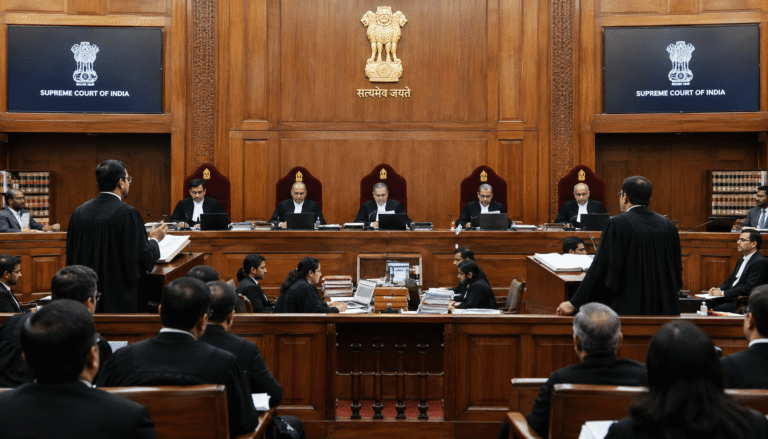
The relationship between a doctor and a patient has traditionally been built on trust, ethics, and professional responsibility. For many years, there was uncertainty in India over whether patients could invoke consumer protection remedies against doctors and hospitals for medical negligence or deficiency in treatment.
This uncertainty ended with the historic Supreme Court judgment in Indian Medical Association v. V.P. Shantha & Others (1995) 6 SCC 651; AIR 1996 SC 550.
This decision transformed Indian healthcare law by holding that medical services, when rendered for consideration, generally fall within the definition of “service” under the Consumer Protection Act, 1986. As a result, patients became entitled to approach consumer forums for compensation in cases of medical negligence and deficiency in service.
The judgment remains one of the most influential precedents in Indian consumer and medical jurisprudence.
Background of the Case
The dispute emerged from multiple appeals and petitions before the Supreme Court concerning a common legal issue:
Can medical practitioners and hospitals be treated as service providers under the Consumer Protection Act, 1986?
Different courts and consumer forums had taken conflicting positions.
Some decisions held that medical treatment amounted to a professional service and therefore should remain outside consumer jurisdiction. Others ruled that medical treatment provided for consideration should qualify as a service under consumer law.
The matter eventually reached the Supreme Court for authoritative determination.
The Court was required to examine:
- Whether doctors render “service” under Section 2(1)(o) of the Consumer Protection Act.
- Whether patients are “consumers” under Section 2(1)(d).
- Whether free medical treatment falls under consumer jurisdiction.
- Whether hospitals and medical institutions can be held liable for deficiency in service.
Legal Issues Before the Supreme Court
The Court framed several important questions:
1. Is medical treatment a “service” under consumer law?
Section 2(1)(o) of the Consumer Protection Act defined service broadly as service made available to potential users.
The medical profession argued that medicine is a profession and not a commercial activity.
2. Does professional status exclude doctors from consumer liability?
Doctors contended that they are governed by professional ethics and medical regulations under the Medical Council framework and should therefore remain outside consumer jurisdiction.
3. Are hospitals providing free treatment covered?
Another issue concerned government hospitals and charitable institutions that provide treatment either wholly free or partly free.
4. Can consumer forums decide complex medical negligence disputes?
The medical profession argued that consumer forums lacked technical expertise for deciding complicated medical matters.
Supreme Court’s Analysis
The Supreme Court adopted a broad and purposive interpretation of the Consumer Protection Act.
The Court observed that the objective of consumer legislation is to protect individuals receiving services and to provide speedy and affordable remedies.
The Court rejected the argument that professional services automatically enjoy immunity.
According to the Court, professionals including doctors remain accountable where negligence or deficiency causes harm.
Medical Profession Is Not Beyond Consumer Accountability
The Court clarified that merely because doctors belong to a regulated profession does not exempt them from legal scrutiny.
Medical practitioners owe a duty of reasonable skill and care.
Where this standard is breached and injury results, legal remedies must remain available.
The Court emphasised that professional autonomy cannot become immunity from responsibility.
Contract of Personal Service vs Contract for Services
One of the most important distinctions drawn by the Court was between:
Contract of Personal Service
This refers to employer–employee relationships involving control and supervision.
Example:
- Employer and employed doctor.
Such arrangements fall outside consumer protection.
Contract for Services
This refers to professional services rendered independently.
Example:
- Patient consulting a doctor.
The Court held that doctor–patient relationships fall under contract for services, making them subject to consumer law.
When Medical Services Fall Under Consumer Protection
The Supreme Court laid down practical categories.
Covered Under Consumer Protection
Medical services are covered where:
- Treatment is provided against payment.
- Private hospitals charge consultation or treatment fees.
- Hospitals charge some patients while treating others free.
- Treatment expenses are paid through insurance.
- Employer-sponsored medical treatment is provided.
In such situations, patients qualify as consumers.
Not Covered Under Consumer Protection
Medical services are generally excluded where:
- Treatment is completely free for every patient.
- Government hospitals provide entirely free services.
- There is no consideration whatsoever.
The Court clarified that payment of taxes does not amount to consideration for medical treatment.
Consumer Forums Can Hear Medical Negligence Cases
A major concern raised by doctors was that consumer forums lacked medical expertise.
The Supreme Court rejected this argument.
The Court noted:
- Consumer forums are headed by legally qualified authorities.
- Forums possess powers to examine evidence and expert opinions.
- Appeals are available at multiple levels.
The Court also observed that not every medical negligence matter is highly technical.
Cases involving obvious negligence can be efficiently handled through consumer mechanisms.
Examples may include:
- Wrong treatment,
- Wrong surgery,
- Medication errors,
- Procedural negligence.
Complex disputes may still proceed before civil courts.
Impact of the Judgment
This decision permanently changed patient rights in India.
Expanded Access to Justice
Before this judgment, civil litigation for medical negligence was expensive and time-consuming.
Consumer forums created a faster and more affordable remedy.
Improved Medical Accountability
Hospitals and doctors became more conscious of record keeping, informed consent, and treatment standards.
Strengthened Consumer Rights
Patients were formally recognised as beneficiaries of medical services and not passive recipients.
Increased Awareness
The decision encouraged greater awareness regarding:
- informed consent,
- professional standards,
- compensation rights,
- hospital responsibility.
Continuing Relevance Under Consumer Protection Law
Although the Consumer Protection Act, 1986 has now been replaced by the Consumer Protection Act, 2019, the principles laid down in Indian Medical Association v. V.P. Shantha continue to guide courts and consumer commissions.
Modern consumer jurisprudence still relies heavily on this judgment when deciding:
- Medical negligence claims,
- Hospital liability,
- Consumer status of patients,
- Deficiency in healthcare services.
The ruling remains foundational to healthcare accountability in India.
Conclusion
The Supreme Court’s decision in Indian Medical Association v. V.P. Shantha marked a turning point in Indian healthcare and consumer law.
By recognising patients as consumers and medical treatment as a service in appropriate cases, the Court created a balance between professional autonomy and patient protection.
The judgment did not make doctors insurers of successful outcomes. Instead, it reinforced an important principle: when healthcare is provided for consideration, it must meet reasonable standards of care.
Even decades later, this ruling continues to influence medical negligence litigation and remains one of the most cited authorities in Indian consumer jurisprudence.
Key takeaway: Paid medical treatment in India is generally subject to consumer protection remedies, and patients have enforceable rights against deficiency in healthcare services.
Follow the Link below to watch the video: